Colombo Process (CP)
Promoting safe, orderly, and regular labour migration through regional collaboration
Overview
The Colombo Process (CP), established in 2003, is a leading Regional Consultative Process (RCP) on the management of overseas employment and labour migration in Asia. It provides a state-led platform for dialogue, information sharing, and policy coordination among labour-sending countries, with the objective of enhancing the protection, welfare, and development outcomes of migrant workers and their families.
The Process focuses on good governance of labour migration, ethical recruitment, skills development, social protection, and strengthening institutional capacities in countries of origin.
Membership Structure
The Colombo Process consists of 12 labour-sending countries from South and South-East Asia:
Afghanistan, Bangladesh, China, India, Indonesia, Nepal, Pakistan, Philippines, Sri Lanka, Thailand, Vietnam, and Cambodia.
International organizations such as the International Organization for Migration (IOM) and the International Labour Organization (ILO) support the Process as key partners. Destination countries, civil society organizations, and the private sector participate as observers and partners in thematic discussions and technical activities. IOM provides Secretariat and Technical Support.
Sri Lanka’s Leadership and Engagement
Sri Lanka is a founding member of the Colombo Process and has played an active role in shaping its strategic direction since its inception. Sri Lanka has served as Chair of the Colombo Process from October 2013 until April 2017, demonstrating strong leadership in promoting migrant worker protection, ethical recruitment practices, and regional cooperation on labour migration governance.
Through its chairmanships and continued engagement, Sri Lanka has contributed to advancing consensus on fair recruitment, skills recognition, gender-responsive migration policies, and strengthened collaboration between countries of origin and destination. Further, Sri Lanka is being a Chair of the Thematic Area Working Group (TAWG) on Skills and Qualification Recognition while being an active member of the following TAWGs.
- Pre-departure Orientation and Empowerment, Chaired by the Philippines
- Fair and Ethical Recruitment Practices (FERP) Chaired by Bangladesh
- Skills and Qualification Recognition Chaired by Sri Lanka
- Cheaper, Faster and Safer Transfer of Remittance chaired by Pakistan
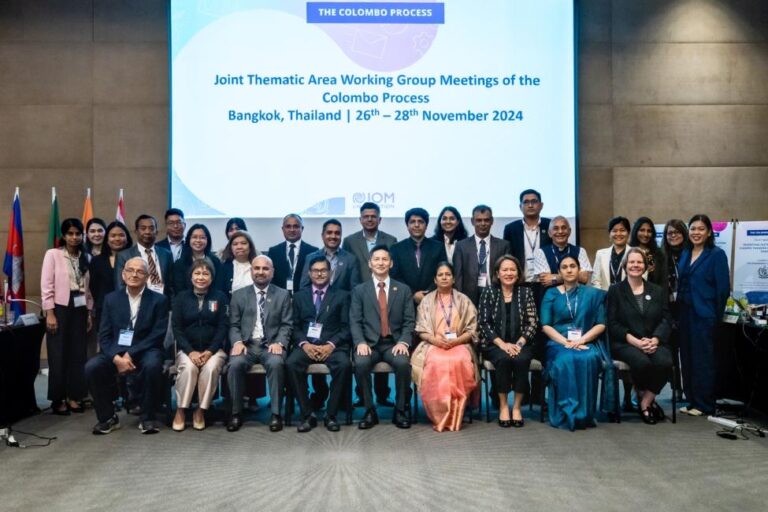
- a General meeting on Colombo Process 28/11/2024
Key Areas of Cooperation
The Colombo Process facilitates collaboration among member states in the following priority areas:
- Protection of migrant workers and promotion of fair and ethical recruitment
- Skills development, recognition, and portability
- Labour market information sharing and policy coherence
- Social protection and welfare of migrant workers and their families
- Capacity building of labour migration institutions
Ongoing Engagement
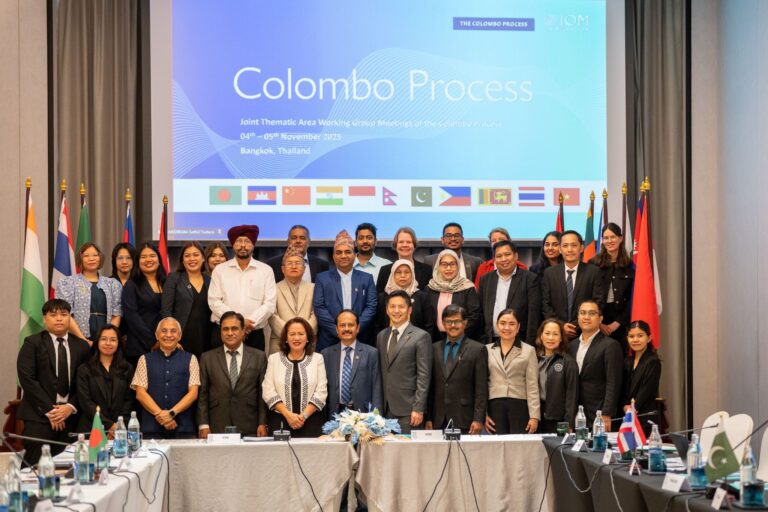
Sri Lanka continues to actively participate in Colombo Process Ministerial Consultations, Senior Officials Meetings, and technical working groups. Through the Ministry and the Sri Lanka Bureau of Foreign Employment (SLBFE), Sri Lanka remains committed to leveraging the Colombo Process to improve migration outcomes, strengthen regional partnerships, and ensure that labour migration contributes positively to national development. Recently in November 2025, The Foreign Employment Section of the Ministry has Participated the TAWG meetings in Thailand.