
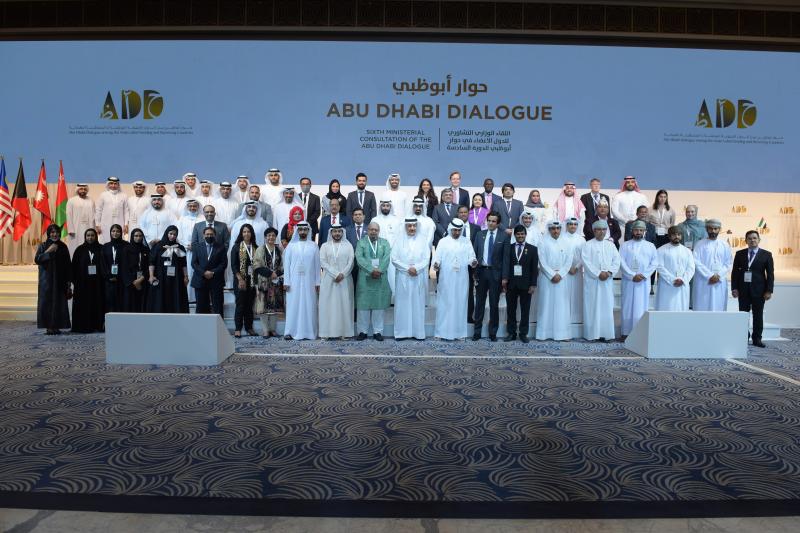
Abu Dhabi Dialogue (ADD)
Fostering safe and orderly labour migration through regional cooperation
Overview
The Abu Dhabi Dialogue (ADD), established in 2008, serves as a premier Regional Consultative Process (RCP) facilitating dialogue and cooperation between Asian labour-sending and receiving countries. This state-led forum operates within some of the world’s largest temporary labour migration corridors, promoting safe, orderly, and regular migration pathways.
Membership Structure
The ADD comprises ten labour-sending countries from the Colombo Process—Afghanistan, Bangladesh, India, Indonesia, Nepal, Pakistan, Philippines, Sri Lanka, Thailand, and Vietnam—alongside seven receiving nations: Bahrain, Kuwait, Malaysia, Oman, Qatar, Saudi Arabia, and the United Arab Emirates. Switzerland, the International Organization for Migration (IOM), International Labour Organization (ILO), private sector entities, and civil society organizations participate as regular observers. The permanent secretariat is maintained by the United Arab Emirates.
Sri Lanka’s Leadership and Engagement
Sri Lanka demonstrated significant commitment to regional labour mobility governance by serving as Chair of the Abu Dhabi Dialogue from 2016 to 2019. This leadership role enabled Sri Lanka to shape policy discussions and facilitate cooperation among member states during a critical period of labour migration development.
Recent Developments
In September-October 2025, senior officials from ADD member states convened virtually to address emerging challenges in labour mobility. Over 120 representatives engaged in discussions on climate change impacts, green skills development, the gig economy, and diversity-driven productivity. The Foreign Employment Section and Sri Lanka Bureau of Foreign Employment (SLBFE) actively participated, reaffirming Sri Lanka’s commitment to Skills Mobility Partnerships, enhanced worker protection frameworks, and gender-responsive policy approaches that benefit Sri Lankan migrant workers and their families.