Global Compact for Safe, Orderly and Regular Migration (GCM)
Strengthening international cooperation for humane and well-managed migration
Overview
The Global Compact for Safe, Orderly and Regular Migration (GCM), adopted in 2018, is the first inter-governmentally negotiated global framework covering all dimensions of international migration. It provides a comprehensive set of guiding principles, objectives, and commitments aimed at improving migration governance, protecting the rights and dignity of migrants, and enhancing the positive contributions of migration to sustainable development.
The GCM is non-legally binding and respects the sovereignty of States, while emphasizing shared responsibility and international cooperation in addressing migration challenges and opportunities.
Framework and Scope
The GCM is built around 10 guiding principles and 23 objectives, covering the entire migration cycle. These include minimizing the adverse drivers of migration, enhancing availability of regular migration pathways, protecting migrant workers from exploitation and abuse, strengthening border management, ensuring access to basic services, and facilitating safe return, readmission, and reintegration.
The Compact adopts a whole-of-government and whole-of-society approach, encouraging collaboration among governments, international organizations, civil society, the private sector, trade unions, academia, and migrant communities.
Sri Lanka’s Commitment and Engagement
Sri Lanka endorsed the Global Compact for Migration in 2018, reaffirming its commitment to promoting safe, orderly, and regular migration in line with national priorities and international standards. Sri Lanka actively engages in the implementation and review of the GCM through national, regional, and global mechanisms.
Sri Lanka has participated in International Migration Review Forums (IMRFs) and regional review processes, sharing progress, challenges, and good practices related to migrant worker protection, ethical recruitment, skills development, and reintegration of returnees.
Key Priority Areas
In line with the GCM objectives, Sri Lanka’s engagement focuses on:
- Protection of migrant workers’ rights and prevention of exploitation and trafficking
- Promotion of ethical recruitment and fair employment practices
- Skills development, recognition, and labour mobility pathways
- Access to social protection and essential services for migrants
- Strengthened data, evidence-based policymaking, and international cooperation
Implementation and Partnerships
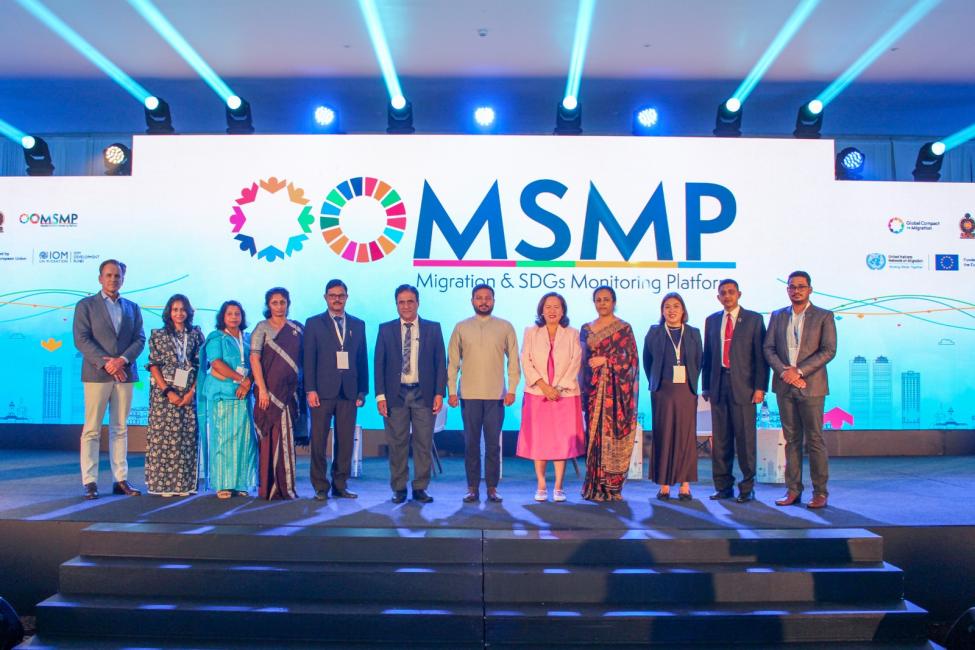
Implementation of the GCM in Sri Lanka is supported through collaboration with relevant line ministries, the Sri Lanka Bureau of Foreign Employment (SLBFE), international partners such as IOM and ILO, civil society organizations, and social partners. These partnerships contribute to aligning national migration policies with the GCM objectives while ensuring that migration contributes positively to sustainable development. IOM provides Secretariat Support.
Sri Lanka remains committed to advancing the Global Compact for Migration as a practical framework to enhance migration governance, protect migrant workers and their families, and strengthen regional and global cooperation.